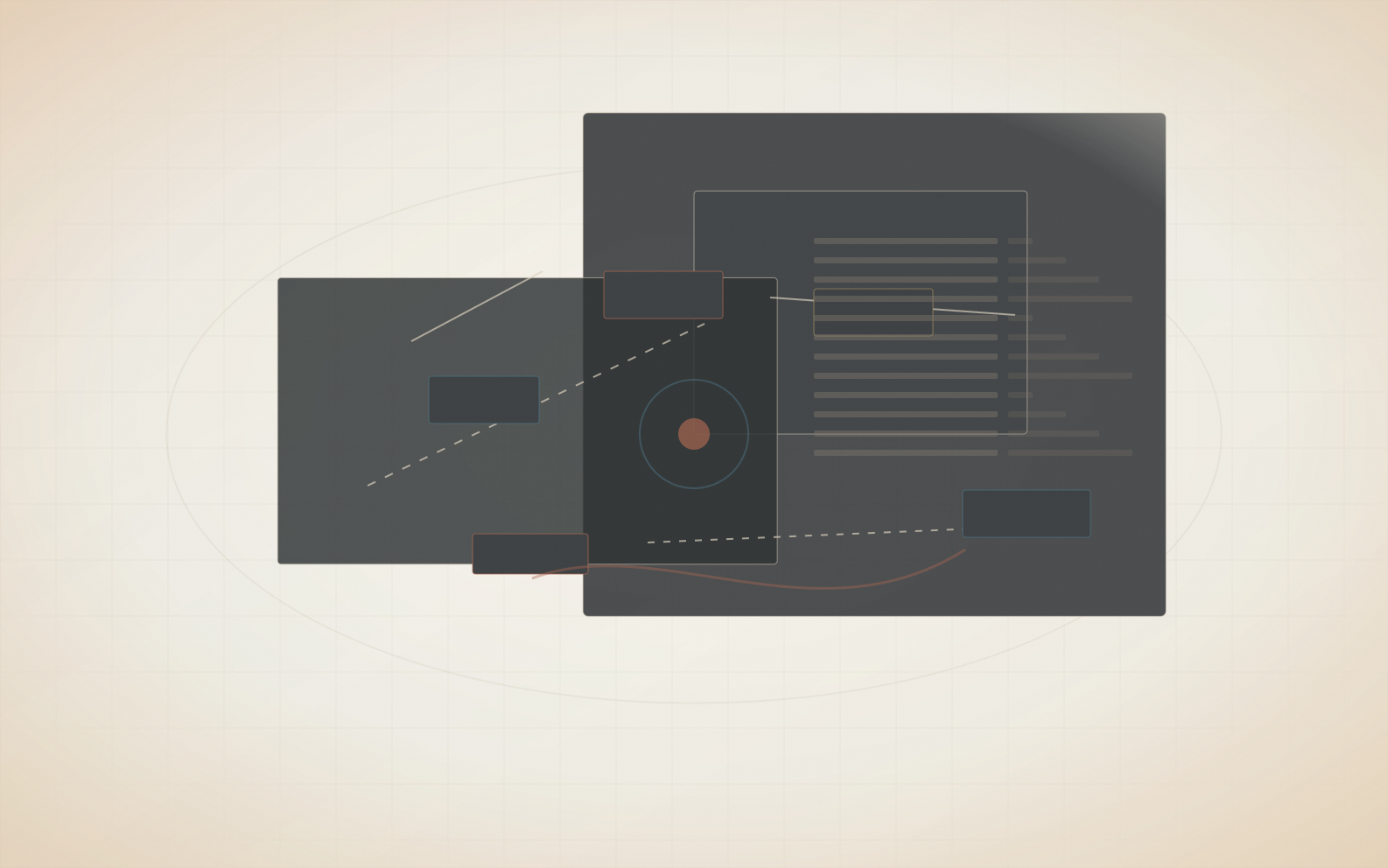
Editorial thesis, proof-safe boundary.
The model should draft and propose work, while HELM checks whether the work may run. This paper describes the separation between stochastic suggestions and policy-based execution authority.
Model BoundariesPolicy ChecksTool Governance
What this does and does not claim.
Does - Frames model proposal and HELM execution governance as a research lens for governed AI execution.
- Separates model proposal from execution authority.
- Keeps product claims tied to current public HELM evidence surfaces.
Does not - Does not claim every described pattern is generally available in production.
- Does not claim third-party compliance approval, vendor partnership, or compliance attestation.
- Does not make local demos, tests, or diagrams equivalent to live customer proof.
Claim, boundary, evidence implication.
Claim Models should propose actions while HELM governs execution.
Boundary The claim is about the public execution-boundary pattern, not every private Enterprise capability.
Evidence Public claims should point to Kernel policy, conformance, receipt, and verifier evidence.
Where this maps.
Maps to HELM AI Kernel. Product relevance: HELM AI Kernel. Status: PUBLIC. Horizon: CURRENT.
The product boundary is simple: models propose, HELM governs execution. The model can generate a request. HELM checks whether that request has policy, scope, approval, and evidence before any connector acts.
Why it matters now
- This separation keeps useful model fluency without handing the model unchecked authority.
- A denial or escalation is a successful safety outcome, not a failed agent run.
- Receipts matter because the system must prove what decision was made and why.
Boundary and evidence
This article describes the public execution-boundary pattern. It does not imply every private Enterprise or Company OS capability is public.
This is the bridge article into the HELM Kernel: inspect the boundary, then verify how decisions and receipts are represented.
Product map
Read signed receipts and replayable evidence next if the boundary decision needs to become auditable proof.
The operating rule is consistent across the library: research can frame the question, but execution claims need source-owned proof. Look for policy checks, approval state, connector contracts, receipt hashes, replay evidence, or a clearly labeled product surface before treating an idea as current capability.