Strategic Strategic / non-normative

Architecting the Autonomous Enterprise

The long arc from company context to checked action and proof

The autonomous enterprise needs explicit layers for context, proposal, governance, execution, and evidence.

STRATEGIC 5 min Intermediate Thesis
Article map
Maps to
Maps to HELM AI Kernel
Status
Strategic
Reviewed
2026-06-08

Editorial thesis, proof-safe boundary.

Autonomous enterprise architecture starts with context, but it only becomes operationally safe when proposal, governance, execution, and evidence are separate layers. This article frames that architecture as strategic, non-normative research.

Autonomous EnterpriseGoverned WorkflowsEvidence

What this does and does not claim.

Does
  • Frames autonomous-enterprise architecture as a research lens for governed AI execution.
  • Separates model proposal from execution authority.
  • Keeps product claims tied to current public HELM evidence surfaces.
Does not
  • Does not claim every described pattern is generally available in production.
  • Does not claim third-party compliance approval, vendor partnership, or compliance attestation.
  • Does not make local demos, tests, or diagrams equivalent to live customer proof.

Claim, boundary, evidence implication.

Claim

The autonomous enterprise needs explicit layers for context, proposal, governance, execution, and evidence.

Boundary

This is strategic architecture research, not an assertion that every layer is currently shipped.

Evidence

Public architecture claims must remain linked to shipped or gated HELM evidence.

Where this maps.

Maps to HELM AI Kernel. Product relevance: HELM AI Company OS, HELM AI Kernel. Status: Strategic. Horizon: STRATEGIC.

Diagram interlude

Autonomy becomes governable when the loop is closed.

A proposal, boundary check, verdict, execution path, and receipt trail form one inspectable loop instead of an opaque agent run.

The Autonomous Enterprise LoopGOVERNEDCLOSED-LOOP
Company work flows through HELM's execution boundary. Only checked actions run. Everything leaves proof.
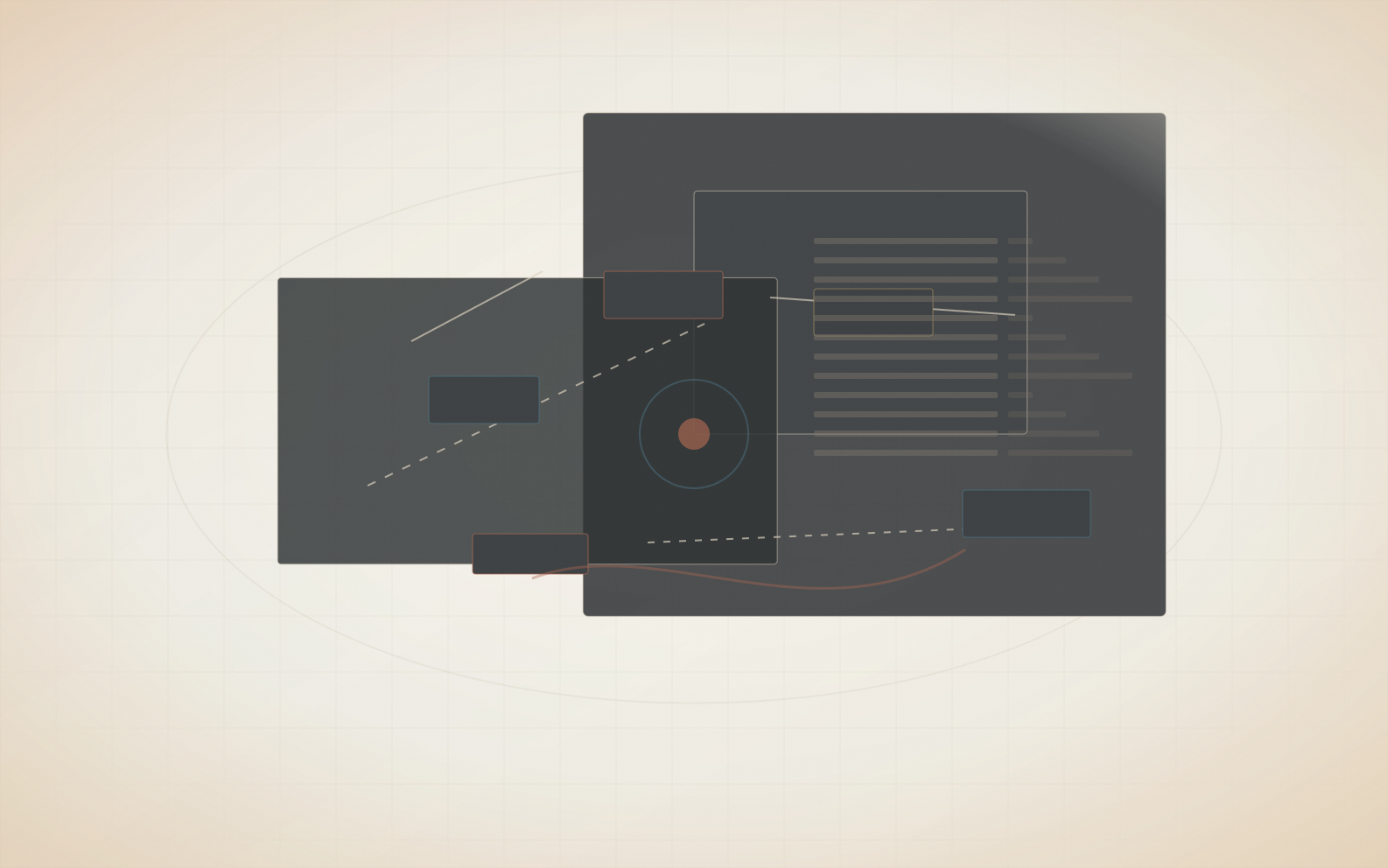
The Autonomous Enterprise LoopA horizontal loop diagram showing 9 stages of governed AI execution. Stages 1-4 (Company Work, Context, Plan Gap, GeneratedSpec) represent proposal. A vertical double-line execution boundary separates proposal from execution. Stages 5-8 (HELM Boundary, CPI Verdict, Action, Proof) represent governed execution. Proof flows back to Context, closing the loop.SYS.PLANE.PROPOSESYS.PLANE.GOVERNEDPROPOSEEXECUTE + PROVE1234EXECUTION BOUNDARY56789. Proof returns to company evidence
Text description
  1. Company Work — Meetings, tickets, repos, docs, calls, incidents.
  2. Context — Source-backed company evidence and permission-aware retrieval.
  3. Plan Gap — Should-vs-is comparison finds a mismatch.
  4. GeneratedSpec — HELM drafts a source-backed proposal; it is not execution authority.
  5. ── HELM Boundary ── — PEP/CPI validates policy, identity, sandbox, connector, and evidence requirements.
  6. CPI Verdict — ALLOW, DENY, or ESCALATE.
  7. Action — Only ALLOW dispatches a governed side effect.
  8. Proof — Receipt → ProofGraph; EvidencePack or checkpoint as required.
  9. Loop Closure — Proof returns to company evidence, closing the loop.
Open standalone diagram

Autonomous-company architecture is not a single agent with more permissions. It is a layered system that separates company context, model proposal, policy authority, execution, and evidence. The useful question is not whether a model can plan work. The useful question is where the right to act is checked.

Why it matters now

  • Without layers, every improvement in model capability increases the blast radius of a wrong action.
  • A company can become more automated only when each transition from suggestion to effect has a named boundary.
  • The architecture must make proof normal, not exceptional, because after-the-fact explanations are weak substitutes for pre-action authority.

Boundary and evidence

This article is strategic architecture research. It does not claim that every layer is publicly shipped or available as a single production system today.

Read it as the map around HELM, not as a replacement for HELM product evidence. Kernel pages remain the current public boundary proof. Company OS pages describe reviewed-access direction.

Product map

Use this piece after the execution authority thesis when you need the system-level map: context can inform work, models can propose work, HELM decides whether work may cross the boundary.

The operating rule is consistent across the library: research can frame the question, but execution claims need source-owned proof. Look for policy checks, approval state, connector contracts, receipt hashes, replay evidence, or a clearly labeled product surface before treating an idea as current capability.

Request architecture review Back to Research